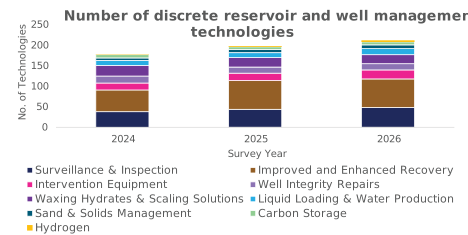
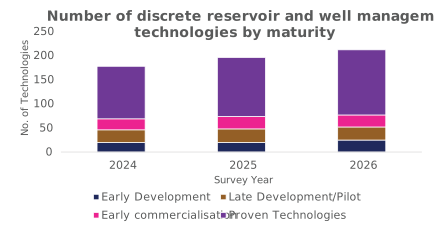
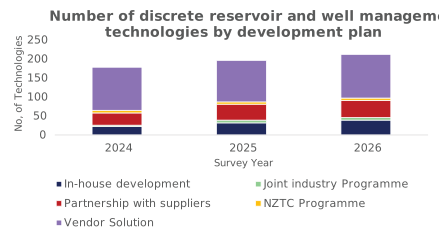
With more than 210 technologies reported, and 40% of these in the development or early deployment stage, reservoir and well management is a very active area in the UKCS technology space.
In 2025, operators reported new technologies focusing on improved recovery, reservoir monitoring and improved well surveillance. These included remote/remedial well surveillance and monitoring of gas flow rates using AI based volume quantification of bubble flow count, management and intervention technologies such as tubing retrievable/retrofit SSSVs, storm chokes for HPHT wells, and water shut-off annular isolation technologies.
Technologies for carbon storage operations and hydrogen storage technologies are increasing.
There has been a high-degree of deployment in the field, thanks to partnerships between operators and suppliers in applying these solutions to specific requirements.
Reservoir and well management technologies
Operators are predominantly focusing on technologies designed to improve and support recovery, reservoir monitoring, and well surveillance, management and intervention. The number of technologies for carbon storage operations is increasing, and two hydrogen technologies were reported this year.
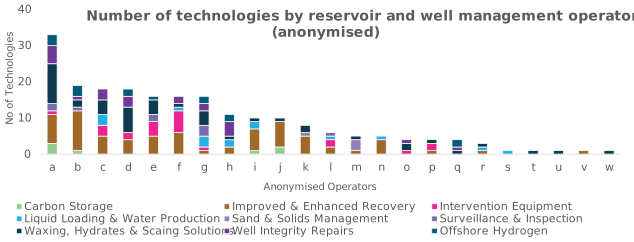
There is widespread interest in these technologies, with 14 operators having at least five reservoir and well management technologies in their plans. Twenty-three operators reported at least one technology.
There is a balanced mix of technologies in the early/late development stages in this area, with circa 24% in the development stages. Early commercialisation and proven technologies make up the balance.
Operators rely on vendors to source the majority of technologies (54%), but are also active in technology development directly and/or in partnership with others.
Readiness definitions: Early development (TRL 1-4), late development/Pilot (TRL 5-7), early commercialisation (TRL 8), proven (TRL 9)
New technologies this year include fluid density measurement in high angle wells where traditional gradiomanometer tools do not work, software to integrate different datasets (wellbore, heavy minerals, seismic, geology) to enable real-time updates of geological models during drilling, and collation and summary of well files using advanced AI to harvest vast amounts of unstructured data and transform it into actionable insights. New/emerging technologies include a multi-stage green and blue hydrogen production facility, oil identification from drilling cuttings, and analysing wellhead samples to create a pseudo-production logging tool (PLT).
- Fluid density measurement in PLTs to measure in high angle wells where traditional gradiomanometer tools do not work. Reduces uncertainty in PLT interpretation.
- TRL 9 commercially available (New)
- Software to integrate different datasets, including wellbore, heavy minerals, seismic, geology, to enable real-time updates of geological models during drilling,
- TRL 9 commercially available (New)
- Collation and summary of well files using advanced AI to harvest vast amounts of unstructured data and transform it into actionable insights. A study was commenced in 2025 to test functionality using a dataset of known quality. In future this software will be considered for day-one data analysis during multi-well P&A activity.
- TRL 9 commercially available (New)
- AI volume quantification: In-house development to monitor gas flow rates by quantification of bubble flow count for monitoring spurious leak.
- TRL 8 early commercialisation (New)
- Oil identification from drilling cuttings: Trials to identify unique oil fingerprint along a wellbore from drilling cuttings and analysing wellhead samples to create a pseudo-PLT. Calibration with PLTs as part of development scope.
- TRL 1-4 early development (New)
- Onshore hydrogen: Multi-stage green and blue hydrogen production facility.
- TRL 1-4 early development (New)
New this year are valves installed in the completions that can be activated using pressure pulses from surface, autonomous inflow control valves (AICVs) to preferentially cut back higher watercut zones, automated production optimisation options, water shut-off and conformance control. Emerging technologies include microgel pre-gelled polymer, gas lift changeout on powered coiled tubing, and a heavy oil hydraulic submersible pump (HSP) with integrated thermal heater.
- Valves installed in the completions that can be activated using pressure pulses from surface and set to be open, closed or at a certain choke size. Reduces need for intervention. Installed in two wells in 2025 and activated in an injection well.
- TRL 9 commercially available (New)
- Autonomous inflow control valves (AICV) in lower completions to preferentially cut back higher watercut zones. Brought online in August 2025.
- TRL 8 early commercialisation (New)
- Automated production optimisation (APO) options for automated well control, automated process control, automatic well testing, for automatic gas lift optimisation, rate allocation, including a flowrate soft sensor.
- TRL 8 early commercialisation (New)
- Water shut-off and conformance control using a microgel which is a pre-gelled two-micron polymer, tolerant up to 165C and suitable in H2S, iron, oxygen and high salinity conditions. Their stability is strongly enhanced by internal crosslinks. Their small size makes them suitable for water shut-off and conformance control. Their size prevents invasion of the lowest permeability zones and creates flow resistance in the highest permeability zones by adsorption onto the rock surface.
- TRL 1-4 early development (New)
- Gas lift changeout on powered coiled tubing to enable annulus pressure management for wells which are stimulated. Typically the gas lift valve in the upper completion is removed and replaced using wireline. There is limited track record of gas lift changeout on coiled tubing in industry. Uses electric-line powered mechanical tools (resolve, stroker and anchor) deployed via a coiled tubing powered fibreoptic cable.
- TRL 1-4 early development (New)
- Flow assurance heavy oil hydraulic submersible pump (HSP) with integrated thermal heater.
- TRL 1-4 early development (New)
New technologies include a cleaning flange for NORM contaminated tools, and multiple set plug that can be set in a single intervention run to enable flow trials to test water shut-off operations. Emerging technologies include a HPHT release sub in case of a toolstring being stuck.
- Multiple set plug that can be set in a single intervention run to enable flow trials to test water shut-off operations. Alternative to PLT in selected wells.
- TRL 9 commercially available (New)
- Cleaning flange for NORM contaminated tools: Intervention tools returning to surface contaminated with NORM require quarantining, cleaning and transportation. This technology is to allow decontamination of the tools within the riser, prior to tools being recovered to surface. Bespoke flange incorporated in the intervention riser/well control equipment. Flange is fitted with ports which allow injection of cleaning fluid into the riser for cleaning/decontamination of tools before they are retrieved to the surface and personnel come into contact with the tools.
- TRL 8 early commercialisation (New)
Technology example:
The new 90’ LynxTM Wire Line Mast is setting a new industry standard. Introducing superior efficiency, increased working environment and without the need for external cranes once installed.

Technology example:
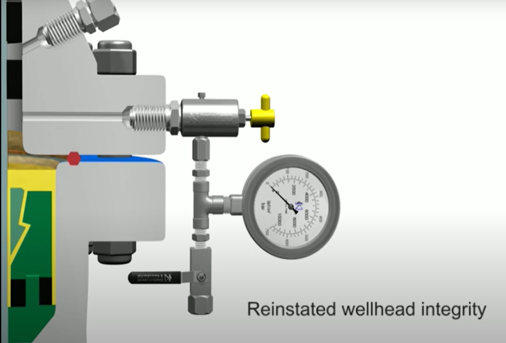
A time activated sealant is deployed in its liquid phase into the voids of wellhead sealing areas, the sealant converts to a resilient, self-bonding and pressure-energized solid seal.
- HPHT release sub: Whilst running e-line there are electronic release devices available between the toolstring and wire in case a toolstring is stuck. This was unavailable on slickline until recently. If a toolstring is stuck in hole, and the wire cannot be released from it, the fishing job is made much more complex and the risk of losing the well is increased.
- TRL 1-4 early development (New)
New this year are a ultra-high temperature (UHT) noise log tool, and a patch-thru-patch relining and repair solution.
- Patch-thru-patch ultra-slim, relining and repair solution.
- TRL 9 commercially available (New)
- Well diagnostic tool: Ultra-high temperature (UHT) logging memory tool capable of operating at temperatures up to 572°F for various well diagnostic studies, including well integrity evaluation, production performance and reservoir monitoring. This tool measures acoustic spectrums from 8 Hz to 60,000 Hz with very high-frequency resolution.
- TRL 9 commercially available (New)
Technology example:
A time activated sealant is deployed in its liquid phase into the voids of wellhead sealing areas, the sealant converts to a resilient, self-bonding and pressure-energized solid seal.

New technologies include pumped scale chemical treatment to remove barium sulphate scale from oil production wells, and an anti-agglomerate kinetic hydrate inhibitor to prevent a hydrate blockage.
- Scale chemical: Pumped chemical treatment to remove barium sulphate scale from oil production wells.
- TRL 9 commercially available (New)
- Anti-agglomerate kinetic hydrate inhibitor: Prevents a hydrate blockage by stopping the agglomeration of hydrate crystals (production of a hydrate slurry). An alternative to thermodynamic inhibitors, e.g. methanol and MEG, which prevent hydrate formation by moving the hydrate formation curve to ensure operating conditions (pressure and temperature) are such that hydrates are not formed.
- TRL 9 commercially available (New)
Technology example:
ClearWell examined five North Sea wells and made recommendations for how ClearWELL™ technology could address their calcite scaling. And subsequently installed ClearWell system on the platform.
Technology example link
Technology example:
Bluespark WASP: Wireline deployed high pulse tool for scale removal and production stimulation.
Technology example link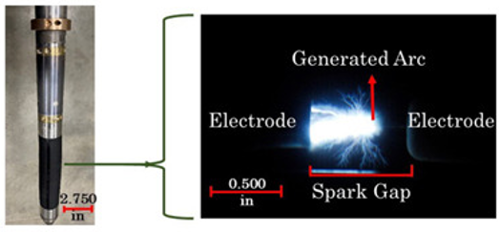
New technologies this year include a tailpipe extension installation allowing for the effective removal of liquid from a liner, a portable multiphase sampling system, and gas bull-heading facilities to enable well deliquification of loaded wells.
- Tailpipe extension: Installation allows for the effective removal of liquid from a liner by increasing the velocity of the fluid above the required Turner velocity for efficient liquid removal.
- TRL 9 commercially available (New)
- Gas well deliquification involving gas bull-heading facilities of loaded wells.
- TRL 9 commercially available (New)
- Portable multiphase sampling system to catch and detect the phase of production fluid.
- TRL 9 commercially available (New)
Technology Example:
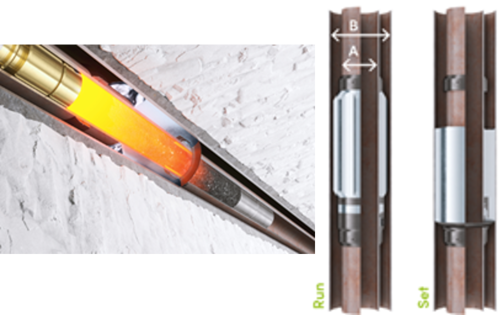
Annular isolation sleeve by Isol8. Designed to be run on casing/liner like a centraliser. Left in situ and then melted at well decom stage for annular isolation or when well shows annular integrity issues during production.
Technology example:
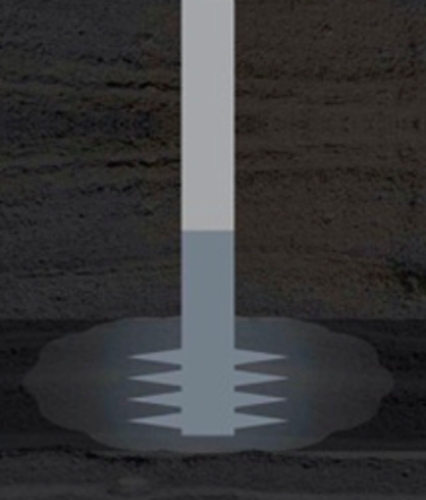
Resolute expanding polymer grain. Pumped into the reservoir to make it expand and fully block permeability, it provides a barrier to barrier, self-healing seal surrounding the wellbore. It blocks perforations, screens and bore space providing a self-healing pre-barrier to plugs and cement.
New this year is an integrated sand management platform that combines analytics, well history and real time surveillance data.
- Integrated sand management platform that combines analytics, well history and real time surveillance data to detect sanding events early, filter out false positives, and streamline decision making, reducing sand related deferrals and protecting well integrity.
- TRL 5-7 late development/pilot (New)
Technology example:
Ceramic sand screens from 3M showed enhanced longevity in comparison with steel screens in an extreme hardness erosion test. The systems were more resistant to chemical attack by fluids such as hot sulfuric acid, aggressive completion fluids and other corrosive chemicals used in the oil and gas operations industry.