New well drilling and construction technologies continue to be reported.
The Wells Task Force’s Reservoir and Wells Optimisation group is focused on well intervention to assist operators in restarting production from shut-in wells.
Solutions for lower-cost wells and digital well planning continue to find traction with the industry.
Specific designs and technologies for CO2 storage are emerging.
Well drilling and construction technologies
Operators’ focus is spread across all aspects of well planning and delivery.
Advances in general well planning and drilling technologies are complemented by more specific technologies for special wells, e.g. extended-reach and multi-laterals, or drilled in thin reservoirs, e.g. using geo-steering.
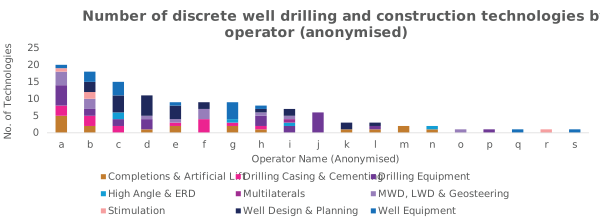
Ten operators have at least five well technologies in their current technology plans, and a further nine operators report at least one technology.
This level of interest is commensurate with the number of operators currently engaged in development drilling.
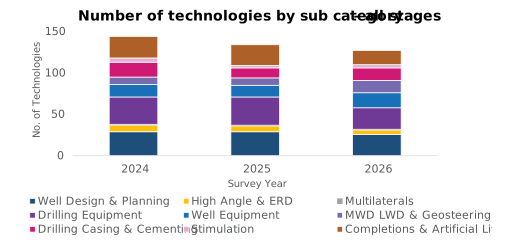
Eighty-seven percent of technologies reported have had at least one field deployment (proven, TRL 9, or early commercialisation, TRL 8).
There is a reliance on vendors to supply the majority of technologies (71% of the total).
Operators are involved in the development and pilot stages of the remaining 29% technologies, mostly in partnership with vendors.
Readiness definitions: Early development (TRL 1-4), late development/pilot (TRL 5-7), early commercialisation (TRL 8), proven (TRL 9)
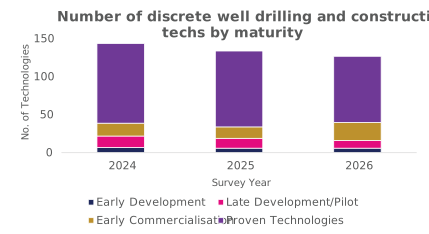
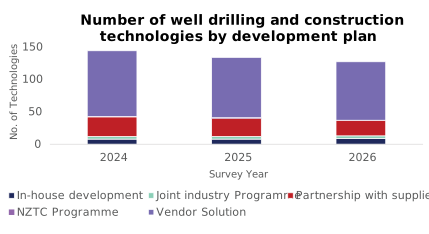
New technologies this year include data curation tooling to turn scattered and inconsistent data into dependable, accessible information. Emerging technologies include well metallurgy advances and drilling collision software.
- Data curation app: The data curation tooling turns scattered and inconsistent data into dependable, accessible information for better decision making across teams.
- TRL 9 commercially available (NEW)
Technology Example:
SLB DrillPlan Software: DrillPlan well construction planning solution provides well planning teams access to data and science in a single, common system. It automates repetitive tasks and validation workflows.
Technology example link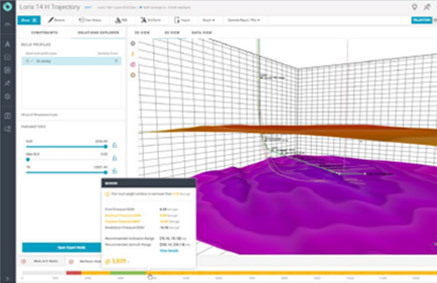
Please refer to the overall technology listing – a downloadable file listing all 1,320 technologies, including previously reported entries, which can be found on the home page of this report (no new technologies this year).
Technology Example:
The EarthStar ultra-deep resistivity service is an innovative logging-while-drilling (LWD) technology that illuminates the reservoir by revealing reservoir formations and fluid boundaries up to 225 feet (68 meters) around the wellbore. It enables operators to position production boreholes accurately while mapping large volumes of the reservoir.
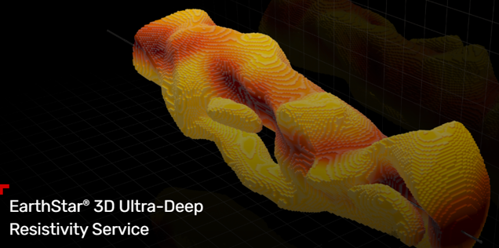
Technology Example:
High accuracy surveying to reduce error ellipses in ERD wells. Dual inclination and other survey tool combinations.
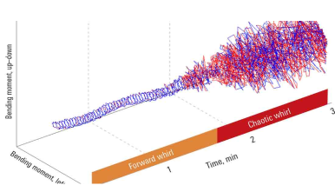
New entries include digital tools for red zone (next generation red zone) and automated red zone control (ARZC), and deep transient testing involving the innovative use of pre-existing wireline technologies to replicate and replace the need for drill stem testing. Emerging technologies include a single-lift, well-to-well transfer system and zonal isolation by hybrid external casing packer.
- Digital tools for red zone (next generation red zone): Automated red zone control (ARZC) camera system giving alerts to driller if people are in the red zone.
- TRL 8 early commercialisation (New)
- Drill stem testing: Deep transient testing involves the innovative use of pre-existing wireline technologies to replicate and replace the need for drill stem testing.
- TRL 8 early commercialisation (New)
New solutions include ultra-deep azimuthal resistivity (UDAR) geosteering technology, field trials of UDAR technology to support geosteering efforts, and machine learning prediction of sonic-log data using other conventional log data trained on previous wells in the field.
- Deployment of ultra-deep azimuthal resistivity (UDAR) geostreering technology: Field trials of UDAR technology to support geosteering efforts. Tool run in three wells so far to aid decision making in real time. Fourth well in planning.
- TRL 8 early commercialisation (NEW)
- Machine learning for sonic data: Machine learning prediction from sonic-log data using other conventional log data trained on previous wells in the field.
- TRL 8 early commercialisation (NEW)
New this year are a slim-hole cement bond logging technology used to acquire acoustic data to evaluate cement quality and well integrity, and an innovative subsea cementing system which delivers stabbed-in, inner string cementing.
- Slim-hole cement bond logging technology: used to acquire acoustic data to evaluate cement quality and well integrity, supporting drilling, casing, and cementing operations.
- TRL 8 early commercialisation (New)
- Subsea cementing system: An innovative subsea cementing system which delivers stabbed-in, inner string cementing. Eliminates the need for shoe tracks, improves cement placement, reduces drill out time and removes the need for remedial cementing.
- TRL 9 commercially available (New)
A multistage sleeve system for delivering stimulation treatments was a new entry this year. This system consists of frac sleeves strategically positioned between open-hole packers.
- Multistage frac sleeve system: For delivering stimulation treatments consisting of frac sleeves strategically positioned between open-hole packers. Enables continuous pumping without the need for individual plugs and perforations in each zone. Reduces operation time and environmental footprint. Estimated 60% reduction in duration, costs and emissions for fracking operations.
- TRL 9 commercially available (New)
Technology example:
Fracture sleeves are the basis for continuous pumping stimulation operations that save time by eliminating the need to run individual plugs and perforating systems for each zone.
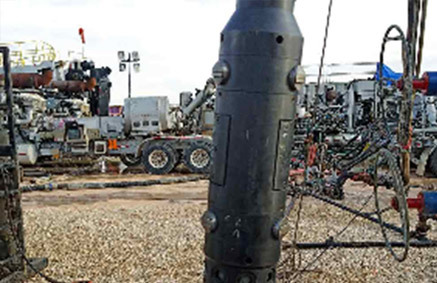
Technology example:
The NCS Innovus frac-isolation assembly is deployed on coiled tubing or jointed pipe to locate and operate NCS Innovus frac sleeves. With more than 10,000 stimulation treatments and countless material and design refinements along the way, this is the most experienced and most robust pinpoint fracturing technology in the world.
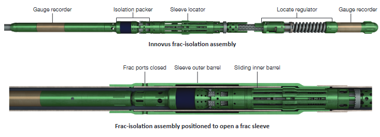
New this year is a high-flow smart completion with a 4 1/2" nominal hydraulic inflow control valve which enables running of a smart completion with higher flowrate capabilities.
- High flow smart completion with 4 1/2" nominal hydraulic inflow control valve: Enables running of smart completion with higher flowrate capabilities. Existing technology yet to be qualified for higher rates.
- TRL 8 early commercialisation (New)